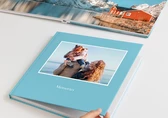
When designing a Photo Book, the desktop software offers various design modes to select from. Each mode provides a distinct approach to initiating your product design and offers different automated tools to assist you in creating your Photo Book swiftly and efficiently according to your requirements. Please note that design modes are also available when designing calendars.
Once the product has been chosen and the material options configured, the software will present you with several design modes. Depending on the time available or the level of control you wish to exercise over the design, you may select from the following:
One Minute Photo Book mode, which automatically designs the product and permits modifications once the initial design is complete.
Pre-designed mode, available when selecting a glossy or matte cover, which offers themed templates with predefined layouts ready for you to populate with images and text.
Comfort designer mode, where images are placed on the pages individually with the assistance of the software.
Empty template mode, which enables you to design the product entirely from scratch without any automatic support.
Irrespective of the design mode selected, you may activate the Auto Layout function once your project is open in the Designer. This option is located in the top left corner of the Designer interface.
When Auto Layout is enabled, images automatically adjust to fit the pages whenever you add or remove them. The layout adapts dynamically to the available space, rearranging existing images and elements to ensure a balanced and cohesive design throughout the Photo Book. This feature is particularly advantageous for rapidly creating photo books, as it allows you to add content without manual adjustments. You may activate or deactivate Auto Layout at any time.
This mode is ideal if you wish to design your Photo Book as quickly as possible. Upon selecting this mode, a window will appear displaying various design lines. You may filter them by category using the drop-down menu in the top left corner. Each design line applies elements such as clipart and backgrounds to your Photo Book according to a specific style. Click on a design line to select it.

The next step is to choose the photographs you wish to include in your Photo Book. Click Select images to upload photos from your device, choose Saal Cloud if you possess an account and your images are already uploaded there, or select the Upload from a smartphone option. This option enables you to scan a QR code to connect your mobile device and import photos directly into the software.
Once uploaded, the images will be displayed in a preview window for you to review before proceeding. Ensure you check the image order, as this determines the sequence in which the photos will appear in your Photo Book. Images may be sorted by name or date using the options in the left column.

If you wish to add more images, use the Add more images button. To remove unwanted images, select them and click the Remove images button in the top right corner.
For easier organisation, the Grouping option allows you to group images by date or location. If you would like the software to automatically detect and skip similar images, activate the Stack similar images checkbox.
Once you are satisfied with your selection, click Continue.
A menu will then open enabling you to choose the number of pages. The software will suggest a recommended number based on the quantity of selected images. You may also manually select a specific number of pages in the box at the bottom. Pages can be added or removed later in the Designer if necessary. Once the number of pages is set, click Select.
The software will process your selections and automatically create the Photo Book, displaying all pages in overview mode.
Examine each page carefully to ensure everything appears as expected. To switch to single-page view, click the single-page view icon in the top right corner or click the edit icon on any page.

Although the Photo Book is automatically designed, you may still modify all objects and images, add new elements, or remove existing ones. You may add text using the Add text button in the top menu, change layouts via the Layouts menu on the right, or switch the design line by opening the Design line menu and selecting a different one.
The Pages menu at the bottom enables you to navigate through the Photo Book. Pages marked in red indicate they have not yet been reviewed and must be checked. From this menu, you may add or delete pages using the buttons on the left and change the page order by selecting a page and dragging it to the desired position.
This mode is available for hardcover Photo Books configured with a glossy or matte cover. It offers professionally designed templates organised by theme, allowing you to create your Photo Book promptly by inserting your own images and text.
Templates are divided into categories, and each template displays information regarding the number of pages and images included. Before selecting a template, you may browse sample layouts by navigating through the thumbnails and preview options. Once opened in the Designer, templates may be fully customised.

After selecting a template, it will open in the Designer with pages that already contain predefined layouts, including empty image and text boxes ready for your content.

To personalise your Photo Book, simply drag images into the image boxes and enter text into the text fields. All elements may be modified, removed, or replaced to suit your design preferences.
This mode is available for Photo Books configured with special covers and for Professional Line Photo Books. In this mode, the product is designed page by page with the assistance of the software, as the Auto Layout feature is enabled by default.
After selecting this mode, choose a design line to define the suggested layouts, then select the number of pages for your Photo Book. Pages may be added or removed later in the Designer. Once the number of pages is selected, click the Select button.
The Designer will open the Photo Book with the specified settings and display blank pages ready for design. As you drag images onto the pages, they will be automatically placed according to a layout. You may deactivate Auto Layout at any time using the toggle in the top left corner of the Designer.
In this mode, the Photo Book is designed entirely from scratch using the tools provided by the software, and the Auto Layout function is disabled by default.
When adding an image directly to a page, the image will be placed without cropping and will retain its original aspect ratio. You may then manually resize and reframe the image as required.
You may also add images, text, fill boxes, cliparts, backgrounds, and configure each element according to your design requirements. If desired, you may activate the Auto Layout function so the software automatically arranges elements when adding new content.
If you drag an image from the left menu onto a page where an image is already placed, the Replace image option will appear above it. Dropping the image onto this option will replace the existing image with the new one.

You may view all pages at once using the overview mode. To open it, click the overview icon in the top right corner of the Designer. All pages in your project will be displayed, enabling you to review the entire Photo Book and rearrange pages if necessary. To reposition a page, click and hold the move icon at the top of the page, then drag it to your preferred location.

In this view, you may also add new pages by clicking the plus icon between pages, delete pages using the bin icon at the bottom of a page, or duplicate a page along with its content using the copy icon. To return to single-page view, click the single-page view icon in the top right corner or select the edit icon (pencil) on the page you wish to modify.
Images, text, fill boxes, backgrounds, and clipart may be added to glossy, matte, and white leatherette covers. For other special cover types, such as natural linen, only text and clipart may be used, as image files are not supported due to the nature of the material.
For complete design flexibility, you may select a Professional Line Photo Book with an acrylic or Brushed Metal Print cover.

Ricevi sconti esclusivi e consigli di design. Registrandoti acconsenti alla nostra Informativa sulla Privacy. Puoi cancellare la tua iscrizione in qualsiasi momento.





 Change your country